Monday, 6 July 2020

What I'm Reading (July 6th, 2020)

 https://thebookdate.wordpress.com/2020/07/06/its-monday-what-are-you-reading-230/


Finished Recently: 

The last book I finished was Sad Cypress by Agatha Christie, just over a week ago. It was very good (as Christie's books usually are!).

Currently Reading:

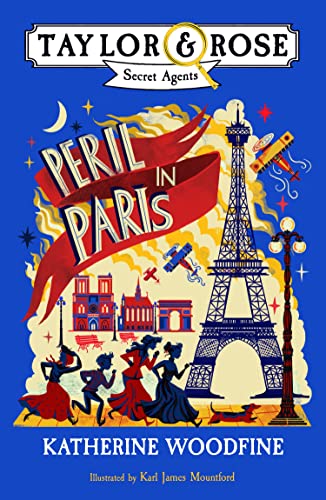
I've been in a bit of a reading slump the last week or so, and have struggled to find something I can really get into. However, on Saturday I picked up Peril in Paris by Katherine Woodfine which I'm really enjoying so far. Hopefully this will be the right book to get me back into reading!


Set in 1911, Sophie, a young woman working for the newly-formed Secret Service Bureau, is sent to Paris to investigate a mysterious death. Meanwhile, in the (fictional) Central European country of Arnovia, Princess Anna is noticing strange things about her governess, and is beginning to suspect that she may be a spy....

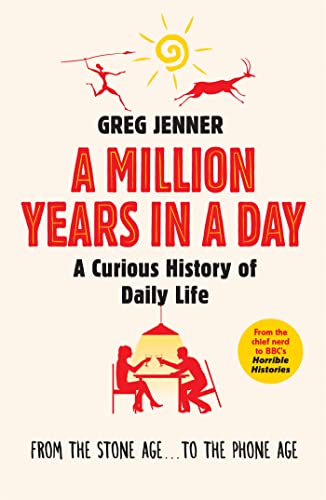
I'm also reading A Million Years in a Day by Greg Jenner, a history of various facets of daily life throughout human history. I'm enjoying this too, but it's the sort of book best read in little bits, rather than all at once.


Coming Up Next:

I'm not sure what I'll read next ... I'll see what I feel like reading when the time comes!


Linking up with It's Monday! What Are You Reading?.

Sunday, 5 July 2020

June Books

 I finished seven books in June:


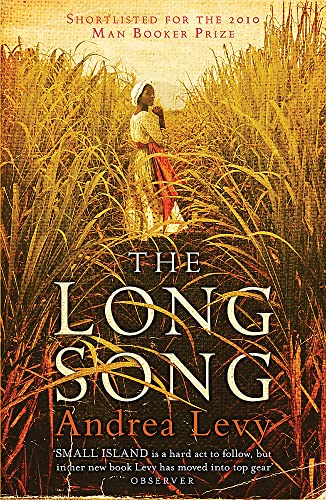
The Long Song by Andrea Levy
Set in 19th-century Jamaica, this is the story of July,  who is born a slave; the novel covers the years before and after the abolition of slavery in Jamaica. I read this having already watched the BBC series based on it, which I thought was very good, and I enjoyed the book too. It was a quick read given that it was around 400 pages long and I got through it in about two days. The novel doesn't shy away from depicting the realities of slavery, but it also includes some lighter moments which prevents the story from becoming too heavy or depressing. I liked the main character an, although many of the other characters were very flawed, they were well drawn and interesting.

The Well of Ascension by Brandon Sanderson
This is book 2 in the Mistborn trilogy. I read the first one back in April, or maybe March. That one was long, but this is really long, at 761 pages.* However, it was a quick read for its length, and definitely a page-turner; I kept reading to find out what would happen next. I enjoyed it as I did the first book, although this is probably a bit darker in the amount of bad stuff that happens. However, the worldbuilding and plot are very interesting and I'm intrigued to find out what will happen in the final book of the trilogy.

*Which makes it only the 4th longest book I've ever read.

Five for Sorrow, Ten for Joy by Rumer Godden
The book is about an order of nuns, the Sisters of Bethanie, who have a particular ministry to women in prison, and indeed there are many former prisoners among their order. The book focuses on the story of Lise. On her own in postwar France, she ends up a prostitute, then in prison. Whilst there, she encounters the Sisters and determines to join them after she is released (which she does). The narrative jumps backwards and forwards in time, so the details of Lise's past life are revealed gradually, in parallel with the story of what happens after she joins the order. I didn't enjoy this as much as In This House of Brede (the other book about nuns by Rumer Godden that I've read), but it was still a good read, and it was also interesting to look at the differences between the nuns in this book and those in In This House of Brede, which is about an order of contemplative nuns, whereas those Five for Sorrow are more directly involved in helping others.

Mazel Tov by J. S. Margot
This was a interesting memoir about the author's relationship with an Orthodox Jewish family, for whom she worked a tutor.

Susan Interferes by Jane Shaw
Part of a vintage children's series about Susan and her cousins, this book takes them on their first trip abroad, to Lake Lucerne in Switzerland. There is a good amount of scenic detail -- enough to be interesting and to set the scene, without getting in the way of the story -- and, as with most of the books in this series, there is a mystery to be solved by Susan & co., but it is the characters I'm mainly reading this for.


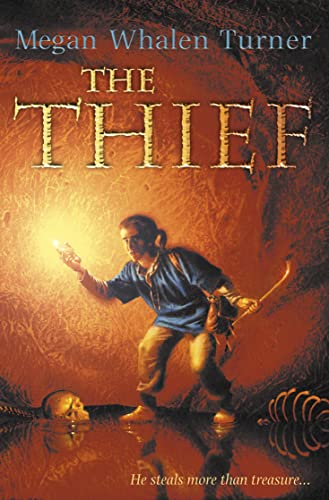
The Thief by Megan Whalen Turner
This was a re-read, so I remembered the general plot, although I had forgotten some of the details. I still found it an enjoyable read and, now that I knew what was going to happen I had fun spotting the little hints the narrator gives along the way. I plan to re-read the next book in the series, The Queen of Attolia, quite soon before going on to the later books in the series, which I haven't read yet.

Sad Cypress by Agatha Christie
A solid Poirot mystery. I don't think I have much more to say about this...
Wednesday, 1 May 2019

Series Review: The Divide Trilogy by Elizabeth Kay


 I’ve just re-read these books*. I actually read them all in the space of just over a week, which is not something often I do with series – usually, after finishing a book I want to read something different, so series tend to get spread over longer periods. But this time, as soon as I’d finished the first and the second book, I just wanted to keep going!

*Well, I’d only previously read the first book in its entirety; I had a bad habit when younger of skipping ahead a lot to read bits that were coming up and then losing interest and not finishing a book because I knew what was coming up.

The books are quite gripping, even though I’d read (most of) them before. Actually, I found I remembered just enough of the first two books that I often remembered something that was going to happen, but not the lead-up to it, which made me want to keep reading to see how the plot fit together.

But anyway, I think these books are very good. I loved The Divide when I read it for the first time (aged 13), but was disappointed when I re-read it a few years later. However, on this read I’ve come to the conclusion that it is a very good book — as are the other two — and I must have just been in the wrong reading mood last time I read it (perhaps I had too high expectations having previously loved it). With the first book especially, the pacing is very well done. The book builds up to a tense bit, then we switch to read about someone else’s viewpoint — which means you have to keep reading to get back to the character you were interested in. But the individual segments are short enough that it doesn’t get frustrating, having to read about someone else.

I really like the world in which the series is set. Basically, it’s a sort of back-to-front world, where mythical creatures like elves and griffins exist, and human beings are believed to be mythical, until a human boy named Felix finds himself in it. Science and magic are reversed — magic is a part of everyday life, but the people are amazed by things like electricity and magnetism — just like people in Felix’s world are by magic. As the series progresses we discover more parts of the world, with different landscapes and cultures. It may not be as well-developed as a world in some other fantasy stories – after all the whole series is only about 1000 pages — but it is fun, and I like how the author addresses questions like why everyone in the fantasy world speaks English. There are a host of great characters too.

The advantage of reading the whole trilogy in such a short space of time, is that is allows me to consider the series as a whole. I think before I read it as three different stories, just with the same characters and world. The stories are separate, in that each book is a complete story in itself — just leaving a loose end or two to set up the next story — but there are definitely common threads running through and developing through the series.

One main thing I noticed is that the prime motivations of the main antagonists in the series is mostly to make money, and whilst they are not afraid of exploiting others to do it, and resorting to violence and murder when necessary, they are not necessarily out-and-out evil. We also see the effects of introducing new technologies, which bring about good benefits but also have unintended (and unforeseen) consequences. One of the themes is that “progress” is not always good, or at least can sometimes be a mixed blessing.

I definitely liked the first book the best, but would recommend the whole series, especially as the later books tie up some loose ends/unexplained things from the earlier books (such as providing an explanation for why everyone in this fantasy world speaks English, which most portal fantasy books just take for granted).

Wednesday, 2 January 2019

2019 Reading Goals

With the beginning of a New Year, it seems a good time to set some reading goals. I don’t want to be prescriptive about the number of books I read (I usually aim for about 100 overall, but I won’t mind particularly if I don’t manage it), but I do have some general aims for the year.

  1. Read more intentionally. I want to be more selective about reading (and buying) books that I will actually enjoy, rather than just reading books I feel I should be interested in. I also want to make more an effort to actually finish books, rather than being distracted by other things and ending up abandoning them.
  2. Re-read more books. (This ties in with the above goal, too.) Last year I re-read six books (one of which was unintentional, as I didn’t realise I’d already read it until after I started reading it), and I’d like to re-visit at least twice that number this year.
  3. Read at least 12 non-fiction books. I do read a fair bit of non-fiction so this shouldn’t be too much of a challenge, but I do have quite a lot of unread non-fiction titles on my shelves.
  4. Read at least one book by Charles Dickens. I’ve only read A Christmas Carol and half of Great Expectations. I’ll probably re-try Great Expectations, but I also have A Tale of Two Cities and Oliver Twist on my shelves, so they are also options.
  5. Re-read a Jane Austen novel. I read all of her novels between 2011-2013, but have so far only got around to re-reading one. This year I definitely intend to revisit at least one more; probably Pride and Prejudice or Mansfield Park (or both).
  6. Read more longer books. I tend to put off reading these even if they are books that I really want to read. So this year I’m going to aim to read at least a few of the chunksters on my shelves. I’m not going to set a specific target, but I’d be quite happy even if I only manage one or two.
  7. Finish the year with fewer unread books on my shelves than the number with which I started it. I failed overall at this last year, but I have been doing better lately – both at buying fewer books and at reading some of the ones that have been sitting on my shelves for a long time. Hopefully I’ll continue this trend into the New Year.

Thursday, 20 December 2018

Best Books of 2018

Fiction

Eleanor Oliphant is Completely Fine by Gail Honeyman

Peter’s Room by Antonia Forest

Pixie O’Shaughnessy by Mrs. George de Horne Vaizey

The Thief by Megan Whalen Turner

Winnie-the-Pooh by A. A. Milne

The Glass Bird Girl by Esme Kerr

Non-Fiction

Booked: Literature in the Soul of Me by Karen Swallow Prior

Patricia St. John Tells Her Own Story by Patricia St. John

Honourable Mentions

An Episode of Sparrows by Rumer Godden

The Queen of Attolia by Megan Whalen Turner

Charlotte’s Web by E. B. White

Journey to Jo’burg by Beverley Naidoo

Catherine, Head of the House by Joanna Lloyd

Mama’s Bank Account by Kathryn Forbes

Paradoxology by Krish Kandiah

Thursday, 8 November 2018

Non-Fiction Highlights of 2018

Since this month is Nonfiction November, I decided to share some non-fiction books that I've enjoyed this year. These are all autobiographies/memoirs, which wasn't intentional, but that seems to be what a lot of my non-fiction reading has consisted of lately.

The Family Nobody Wanted
The story of a family who adopted 12 children, of various ethnicities, in the 1940s/50s. A light, but uplifting read.

The Girl from Aleppo
This is the story of a young girl with cerebral palsy who fled Syria with her sister, travelling along the refugee trail across Europe to Germany. It covers her life in Syria and on the journey, with a little about adapting to life on Germany at the end. I found it a really interesting read, and would recommend it to anyone who would like to understand more about the experiences of refugees.

Too Marvellous for Words!
Julie Welch writes about what life was really like at a girls' boarding school in 1960s England. (It wasn't quite like an Enid Blyton story, except for the midnight feasts.)

Patricia St. John Tells Her Own Story
The story of Patricia St. John, who was a missionary nurse in Morocco and also wrote children's books, some of which were among my favourites as a child. I was especially interested in reading about how she came to write each of her books, but I the rest was interesting too.

Booked: Literature in the Soul of Me
Karen Swallow Prior writes about the books that helped shape her as a person, intertwining it with stories from her life. I found this a stimulating and thought-provoking read and it has made me want to go and read the books she includes that I haven't yet read - which is most of them - which is an achievement as some I wasn't really interested in before. (They are all fairly well known classics.)