Showing posts with label Classics. Show all posts

Friday, 17 March 2023

Classics Club Spin!

I'm joining in with the next Classics Club Spin. The idea is to post a list of 20 books that are still remaining on my Classics Club list. On Sunday 19th March, a random number from 1 to 20 will be chosen, and the challenge is to read the corresponding book by the end of April. 

Having just joined with a new list, I have lots of books to choose from, so I've tried to choose a good variety of options. Some of these will be more challenging to finish by the deadline than others!

Here is my list of 20 books:

  1. The Enchanted April by Elizabeth von Arnim
  2. The Governor of England by Marjorie Bowen
  3. High Rising by Angela Thirkell
  4. Sprig Muslin by Georgette Heyer
  5. Tom's Midnight Garden by Philippa Pearce
  6. The Game of Kings by Dorothy Dunnett
  7. Kingfishers Catch Fire by Rumer Godden
  8. Miss Buncle Married by D.E. Stevenson
  9. A Memoir of Jane Austen by James Edward Austen-Leigh
  10. The Passenger by Ulrich Alexander Boschwitz
  11. David Copperfield by Charles Dickens
  12. Around the World in 80 Days by Jules Verne
  13. Cider With Rosie by Laurie Lee
  14. The Sword in the Stone by T.H. White
  15. The Greengage Summer by Rumer Godden
  16. The Heart of Midlothian by Sir Walter Scott
  17. The Phantom Tollbooth by Norton Juster
  18. The Dove in the Eagle's Nest by Charlotte Mary Yonge
  19. The Pursuit of Love by Nancy Mitford
  20. The Tenant of Wildfell Hall by Anne Bronte

Monday, 20 August 2018

Book Review: Masquerade at the Wells by Lorna Hill

Masquerade at the Wells is the third book in Lorna Hill's series about Sadler's Wells Ballet School. This book shifts the focus from Veronica, the heroine of the first two books who is now a well-known dancer on the Covent Garden stage, to cousins Jane and Mariella Foster. Mariella's mother is a famous ballet dancer, and it is taken for granted that Mariella will follow in her footsteps - but truth be told, she would rather be riding horses than dancing. Jane's mother is convinced that she loves animals, especially horses, and after she is given a pony Jane doesn't want to seem ungrateful by admitting that she doesn't like horses very much, and is in fact a bit afraid of them. However, when she starts taking ballet lessons she finds that there is something she loves to do. How will Jane and Mariella manage to pursue their dreams, despite their families?


When Mariella is offered an audition at Sadler's Wells, the famous ballet school, the solution seems obvious: she and Jane should swap places, and Jane go to the audition in her place. But will they manage to get away with deception, or will Jane lose her chance?

Like the first two books, this is narrated in the first person - mostly by Jane, with the last section by Mariella. The style is chatty and informal, as though the narrator is telling her story, rather than writing it. This allows us to get to know the characters, and also allows the author to explain things about ballet that the reader might not know, in a way that feels natural.

Despite the title, the "masquerade" doesn't take up a large part of the story. It's not until halfway through the book that Jane even goes to London, let alone Sadler's Wells, and we don't hear a great deal about her time there - an issue I also had with the previous book, as I would have liked to know more about the school itself. Lots is skimmed over, and we often only get things second-hand; we wouldn't actually see a scene, just Jane telling or writing to someone about it afterwards. This didn't bother me particularly, but I think it might be a disappointment to some people.

Overall, this was an enjoyable, though not a spectacular, book, much in the vein of the previous two, with stuff about ballet, riding, family relationships, and the Northumberland countryside. If you enjoyed the previous two books in the series, you'll like this one too; although it isn't necessary to have read any of the others first, as it stands quite well alone.

Wednesday, 15 November 2017

Classics Club Spin

 It's time for another Classics Club Spin! You can find out about it here. My list:
  1. The Watsons by Jane Austen
  2. Lorna Doone by R.D. Blackmore
  3. Agnes Grey by Anne Brontë
  4. The Pilgrim's Progress by John Bunyan
  5. My Antonia by Willa Cather
  6. The Wisdom of Father Brown by G.K. Chesterton
  7. In the High Valley by Susan Coolidge
  8. A Tale of Two Cities by Charles Dickens
  9. The Adventures of Sherlock Holmes by Arthur Conan Doyle
  10. The Great Gatsby by F. Scott Fitzgerald
  11. The Life of Charlotte Brontë by Elizabeth Gaskell
  12. Cotillion by Georgette Heyer
  13. Elizabeth, Captive Princess by Margaret Irwin
  14. The Princess and the Goblin by George MacDonald
  15. Further Chronicles of Avonlea by L.M. Montgomery
  16. Pat of Silver Bush by L.M. Montgomery
  17. Hamlet by William Shakespeare
  18. The Painted Garden by Noel Streatfeild
  19. Lark Rise to Candleford by Flora Thompson
  20. The Chaplet of Pearls by Charlotte Mary Yonge
Hopefully, this will help me to make a bit of progress with my list, of which I've been rather neglectful of late.

Tuesday, 3 October 2017

Mini-Reviews #7: Classic Adventures

Twenty Thousand Leagues Under the Sea

Professor Arronax is on an expedition to find what is believed to be a large whale which has been attacking ships. However, his trip takes a surprising turn when he and two companions find themselves trapped on board the submarine Nautilus - the real culprit. Until they can find a way to escape, they must travel along with Captain Nemo and his men, exploring the underwater realm, and attempting to reach the South Pole, facing adventures and dangers along the way.
 
This was quite good. I didn't enjoy it as much as Journey to the Centre of the Earth, but I still found the adventures for the most part enjoyable, and I liked the character of Captain Nemo - he is a bit of an ambiguous character, someone who has suffered a lot and does some bad things, but he is an interesting character and I can't help liking him at least a bit. The descriptions of things seen under the sea were also interesting. I also liked the scientific details - there is enough to make the story somewhat believable, but not so that it gets bogged down in details.
 

The Prisoner of Zenda

Rudolf Rassendyll travels to Ruritania just before the coronation of King Rudolf IV, a distant cousin of his. He is surprised to find out just how much he and the King resemble each other - so much so that most people would not be able to tell them apart. As a result of this he ends up being drawn into a charade, by which he must pretend to be the King, now a prisoner of his half-brother Michael who is after his throne. Michael cannot reveal his as the pretender, without giving away that he has the real King as a prisoner. So Rassendyll, along with two loyal friends, must find a way to rescue the King without being killed themselves.
 
Altogether I really enjoyed this book. It's fast-paced and entertaining, but also has moments of reflection. There are also some quite funny moments, both in dialogue and in event, such as when Rudolf has to fight off three men with a tea-table (who would have thought it?). It's not a book that takes itself too seriously. But the ending too is pretty satisfying. I also liked Rudolf's intentions to be honourable and do the right thing - it also made the situations more complex, and the solutions more satisfying.

Saturday, 30 September 2017

Mini-Reviews #6: School Stories


The Manor House School by Angela Brazil

The girls of Winterburn Lodge are not looking forward to another dreary term at their London boarding school. So they are rather excited when it is announced that, due to an issue with the drains which necessitates extensive maintenance work in the school building, the school will be moving to a country manor house for the summer term. As well as providing lots of opportunities for outdoor games and pursuits, the manor naturally comes with various associated legends and mysteries; in particular, a horde of hidden treasure which is rumoured to be somewhere within the grounds. Lindsay and Cicely, the two heroines, determine to find this treasure, which leads to some adventures - and misadventures. Throw in a few half-term excursions that don't go according to plan, and you get a very action packed book!
 
I quite enjoyed this book. It was entertaining and there was a lot going on. It seems to be aimed at a younger age group than most of Angela Brazil's books; the main characters were eleven and twelve and it read more as an adventure story than a school story, some parts of which stretched credulity rather a little. But it was a fun read. It's available on Project Gutenberg.
 

End of Term by Antonia Forest

The fourth book in Antonia Forest's series about the Marlow family, although the second I've read. Like the first book, Autumn Term, this is mostly about twins Nicola and Lawrie, the youngest in a family of eight children, and their school friends. Unlike The Manor House School, this is a fairly realistic boarding school story, with most of the drama surrounding the end of term Christmas play. Lawrie is desperate to play the Shepherd Boy, while Nicola's friend Miranda, who is Jewish, feels left out at not being allowed to participate. Meanwhile Nicola has hopes of getting into the junior netball team. Things don't go entirely according to plan, but will it all work out in the end?
 
This was a really good book. I didn't enjoy Autumn Term as much as I had been expecting to, but I found this a much better read. The characterisation is very strong and there is a strong emphasis on the relationships between the characters - both within school and between the Marlows in the home scenes - which is very well done and which I liked a lot. Despite being a more realistic story, there's still a fair bit going on and the climax is fairly dramatic, which made it a gripping read towards the end. I definitely really liked this book and will look forward to reading more about the Marlow family. Unfortunately the books can be quite hard to track down, but I do have one more, The Attic Term, sitting on my shelf so I expect I'll be reading that quite soon.
 

I'm linking up with the Old School Kidlit reading challenge, since this month's theme was school stories. I've been rather sporadic about participating so far, but since next month's theme is mysteries, which is another of my favourite genres, I'll hopefully be getting back on track.

Thursday, 28 September 2017

Footnotes: September 2017

I'm linking up again with Footnotes, a monthly quotation link-up hosted by Ashley and Emily.
 
http://sparrowsflysouth.blogspot.co.uk
 
This month's prompt is: a quotation that makes you laugh.
 
I've recently read Strong Poison by Dorothy Sayers; one of her series about Lord Peter Wimsey, who is trying to prove the innocence of a young women convicted of murder. It's a brilliant book, so of course I couldn't just limit myself to one quote.
 
 
"I have already carefully explained to you that this time I am investigating this business. Anybody would think you had no confidence in me."
"People have been wrongly condemned before now."
"Exactly; simply because I wasn't there."
"I never thought of that."
 
*****
 
"I say - I've thought of a good plot for a detective story ... You know, the sort that people bring out and say, 'I've often thought of doing it myself, if only I could find time to sit down and write it.' I gather that sitting down is all that is necessary for producing masterpieces."
 
*****
 
"But you wouldn't want a wife who writes books, would you?"
"But I should; it would be great fun. So much more interesting than the ordinary kind that is only keen on clothes and people. Though of course, clothes and people are all right too, in moderation. I don't mean to say I object to clothes."
 
*****
 
"My idea is that Miss Vane didn't do it," said Wimsey. "I dare say that's an idea which has already occurred to you, but with the weight of my great mind behind it, no doubt it strikes the imagination more forcibly."
 
*****
 
"I know I've got a silly face, but I can't help that."

Tuesday, 29 August 2017

Top Ten Tuesday: Forgotten Classics

http://www.brokeandbookish.com

Top Ten Tuesday is a weekly meme hosted by The Broke and the Bookish. Today's theme is Ten Hidden Gem Books in X Genre. I've decided go for classics, so I'm listing ten older books that have been mostly forgotten or that I think should be better known:

A Cathedral Courtship by Kate Douglas Wiggin
A sweet romantic tale combined with a tour of English cathedrals

The Heir of Redclyffe by Charlotte Mary Yonge
A tragic Victorian bestseller

White Boots by Noel Streatfeild
A story about family, friendship, and ice skating

The Story of the Treasure Seekers by E. Nesbit
Six children determine to restore their family's fortunes - but things don't really go according to plan

Seven Sisters at Queen Anne's by Evelyn Smith
Seven sisters go off to school for the first time,

Half Magic by Edward Eager
A magic coin that only grants half of what you wish for - what could possibly go wrong?

Jane of Lantern Hill by L.M. Montgomery
I've reviewed this recently here.

Young Bess by Margaret Irwin
An entertaining novel about the young Elizabeth I

The Silent Shore by Ruth Elwin Harris
The first in a series about four sisters set during and after World War I

The Girls of St. Wode's by L.T. Meade
A story about six girls at college in the late 1800s

Sunday, 6 August 2017

Book Review: Jane of Lantern Hill by L. M. Montgomery

 (minor spoilers follow)

21470911

Jane and her mother live in Toronto with her grandmother, who loves her mother but bullies Jane. She has always believed that her father is dead, so she is shocked to find that he is in fact alive and living in Prince Edward Island, and  that he wants her to spend the summer with him. Jane goes determined to hate him, but instead she spends a glorious summer keeping house for her father and making friends with the locals. As time passes, both during and after the summer, Jane finds she has much to learn about herself and about life. She also tries to learn about the reasons for her parents' separation, and dreams that perhaps one day they might all be able to live together...
 
I liked Jane. She is perhaps more ordinary than most of Montgomery's heroines; although she is still imaginative, she's not in the same class as Anne or Emily. However, this doesn't stop her from having plenty of good qualities; she is caring, brave, and determined. Although at the start of the story she is rather awkward and lacking in confidence, as the story goes on she learns to become more confident and to stand up for herself more. She also develops a strong understanding of other people; she can see her parents much more clearly than they can see each other. The other characters are also very well-drawn, and realistic. I liked the story too. It's a gentle, character-driven story, which is my favourite kind, really. The writing is lovely and descriptive (of course).
 
There isn't anything that I strongly disliked about it, though there were some parts that I found hard to believe, like how quickly Jane learns to cook and garden, with no prior experience or training. She's supposed to have a natural gift for it, but I don't believe anyone could really learn that quickly, especially at the age of eleven. I also would have liked to spend more time with Jane's friends and neighbours at Lantern Hill; there were quite a lot of them, and there wasn't really time to get to know most of them in the time we spent there. Some of the parts where Jane's grandmother is being particularly awful were a little uncomfortable to read, and I'd really rather be reading about Lantern Hill. But that isn't necessarily a criticism of the story.
 
Two themes stood out to me as I was reading. One is that of jealousy, of selfish love. We are told that Jane's grandmother loves her mother, but it is a selfish love; she can't bear for anyone else, even Jane, to share in her mother's affections. Both of Jane's parents, too, have a tendency to be jealous, to want to be the exclusive focus of each other's attentions. The other theme was that of home. Jane longs for a proper home; she wants to be away from her grandmother, of course, but she also hates the house they live in. When she and her father are looking for a house in Lantern Hill, it has to be just right, to possess a little "magic". The people in the house matter, but the house itself matters too.
 
3629838

Overall, I thought this was a very good book, which deserves to be better known. It's a shame Montgomery never finished the sequel, because I would have liked to have spent more time with Jane and her friends.

Saturday, 15 July 2017

Book Review: A Wrinkle in Time by Madeleine L'Engle

Despite its popularity in the USA, this book isn't particularly well known (as far as I can tell) over here in the UK, so I never came across it as a child. This is a shame, because I think I would have loved it had I read it as a child. However, I still enjoyed it very much, and I'm glad I've finally got around to reading it.

18131
 
Summary (Goodreads): It was a dark and stormy night; Meg Murry, her small brother Charles Wallace, and her mother had come down to the kitchen for a midnight snack when they were upset by the arrival of a most disturbing stranger.

"Wild nights are my glory," the unearthly stranger told them. "I just got caught in a downdraft and blown off course. Let me be on my way. Speaking of way, by the way, there is such a thing as a tesseract".

Meg's father had been experimenting with this fifth dimension of time travel when he mysteriously disappeared. Now the time has come for Meg, her friend Calvin, and Charles Wallace to rescue him. But can they outwit the forces of evil they will encounter on their heart-stopping journey through space?
 
This is quite a hard book to review, as it's kind of hard to describe why I liked it. I found it a little odd, but mostly in a good way - the sort of quirkiness that makes you want to find out more. For most of the book I had literally no idea what was going to happen next - it seemed like just about anything could happen. It felt very much like the story told in the book was very much scratching the surface of the world it was set in - that there was a lot that wasn't revealed or explained to us. I liked the sense of mystery that this added. Overall, I found it a very interesting story, dealing with themes of Love over Evil; a common theme, but one which I don't think can be over-done.
 
Personally, I didn't find I was particularly interested in most of the characters; probably this was just due to a lack of time spent developing them, which was probably necessarily the case in a book this length, especially as there is a fair amount of plot to get in. (Although I did like that Meg was good at maths, which is a very underrated skill among book heroines.) However, I think the other aspects of the book made up for this. Mostly, it's left me wanting more; so I am looking forward to reading the sequels.
 
(At the time of posting, I've read A Wind in the Door, which I also enjoyed a lot, though not as much as this.)

Wednesday, 1 March 2017

Book Review: The Tanglewoods' Secret by Patricia St. John

 21310224

 
Summary (from Goodreads): Ruth and her beloved brother Philip find solace in the expanse of the Tanglewoods' property. There they escape into bird watching, climbing, and general misadventures with their friend Terry.

But life with their Aunt is harsh, and Ruth suffers from an incorrigible temper. Just when she thinks she can't take it anymore, she learns a very special secret about a very special Shepherd. When a dreadful accident hurts one they love, Ruth and Philip learn that the Tanglewoods' Secret isn't meant to be kept a secret.
 
I read this for the Old School Kidlit challenge: a book you loved in childhood. I read this at the age of about six or seven and enjoyed it, but had never revisited it, so I didn't remember much except for a few details. I found that it didn't quite live up on rereading.
 
I think my main problem was that it was just too simplistic. Of course it was written for quite young children, so that isn't necessarily a bad thing, but rereading it now as an adult I just didn't enjoy it as much. Admittedly, the book does make clear that becoming a Christian doesn't make all your troubles and suffering go away, but the issues faced by Ruth and others in the book (including a pretty major tragedy) seem to be got over pretty quickly. I also found myself getting pretty annoyed with Aunt Margaret in the first half of the book; I'm not surprised Ruth keeps being naughty when her aunt is always telling her how bad she is! I also felt that it was unfair that Ruth was often made to help with the housework whilst her older brother was allowed to go out and play, but I suppose that is a sign of when the book was written.
 
The sections I found most interesting were the parts about Ruth and Philip's lives, such as their interest in bird-watching, the games they play together and their schemes for making money so that they can save up to buy a camera, and I wish that there had been more of these in the book. I also liked their relationship - they have a strong friendship as well as being siblings which  always good to read about. I think the messages in the book were mostly good and I liked that it was pointed out that adults (such as Aunt Margaret) also need Jesus and don't necessarily always have it all figured out or do the right thing. I just found the whole story a bit simplistic and the Christian parts quite heavy-handed. But I still found things to enjoy about it, and I did enjoy it more as a child (although not as much as some of Patricia St. John's other books).

Wednesday, 15 February 2017

Book Review: The Thirty-Nine Steps by John Buchan

 1026068

Summary: Richard Hannay, recently returned to London after some years in the British colonies, is bored of his life and fed up of English society - until one day a mysterious man turns up in his flat with a rather sensational story. He claims to have uncovered a secret plot, with potentially huge ramifications, and that there are men trying to kill him to prevent him from revealing their secret. When the man is murdered several days later, it seems that his story is indeed true, and Hannay realises that, not only will the men now be after him, but so will the police, as there is strong circumstantial evidence that points to him as the murderer. So he flees to Scotland, where he must try to survive, evading capture by either of the parties after him, long enough to be able to relate the man's story to the relevant authorities - but will they even believe him?
 
I saw the film of this a while ago and enjoyed it, but I didn't remember that much about it. Probably this was a good thing, because it meant that most of the twists in the book still took me by surprise. I found this an enjoyable, entertaining story, although thrillers aren't usually my cup of tea. I enjoy mysteries, but generally prefer ones where the story is focused on the puzzle and the characters, whereas this story is more action-focused, with the main character mostly trying to stay alive and escape from the bad guys. However, Hannay has does have some entertaining adventures along the way, and manages a few clever escapes, and I still enjoyed this book. It's also a very quick read, which I read in one afternoon/evening. If it's the sort of thing you enjoy, then I'd definitely recommend it.

Wednesday, 23 November 2016

Book Review: Whose Body? by Dorothy L. Sayers

192893 

This is the first in Dorothy Sayers' Lord Peter Wimsey mystery series, but the second that I have read. Gaudy Night was really good but, since many people consider it the best in the series, I was worried that this book wouldn't live up to it; especially as GN focuses mostly on Harriet Vane, who doesn't appear in this book, and I wasn't sure I would enjoy this as much with only Peter. I needn't have worried though; although this isn't quite as good, it's definitely still very enjoyable.

The mystery itself was interesting; it begins with the rather bizarre circumstance of a man discovering a dead body in his bath, with no idea who it is or how it got there. Naturally this is rather intriguing to Lord Peter, who decides to investigate, working with a friend in the police. There are quite a few twists and turns along the way to the conclusion (which I guessed just after Lord Peter had solved it, but before he revealed the solution), which is certainly original. Some aspects were a little gruesome but this wasn't overdone.

Another aspect of the book that I really liked was the characters, who I look forward to getting to know better in later books; it was good to see more of Peter himself in this book, along with his devoted servant/sidekick Bunter, and his mother, the Dowager Duchess of Denver, who are all great characters. It was also just a fairly entertaining read all round. I especially enjoyed the occasional references to detective novels; there are a few times when characters say things like "if we were in a detective novel this would happen, but obviously this is real life," which I found quite entertaining.

There are a few offensive comments made by characters in the book, particularly with regards to Jewish people, which has caused some controversy; although the impression I got was that these reflected the views of the characters saying them (and of many people at the time the book was written), and are not necessarily those of the author. Other than that, I can't think of many things I didn't like about this book.

Overall, this was a great book, and I'm looking forward to reading the rest of the series.

Thursday, 17 November 2016

Mini-Reviews #4: Historical Settings

  30844952

The Archers of Isca by Caroline Lawrence
The sequel to Escape from Rome; this was almost as good as its predecessor! This book focuses more on Fronto, the eldest sibling, although we also get a lot more of the other characters than the book description implies. I love the characters in this series so much, so that was great. Like the first book, there is a fast-moving plot but it is also quite character-driven, which I like. The ending does feel a bit inconclusive, as there are a few plot strands left quite open, but since this is part of a series that is understandable (although it is quite a long wait until the next book comes out!) There was one twist in the story that, as a Roman Mysteries fan, I found very exciting, but I won't spoil it for you! All in all, this was a very good book, and I'm looking forward to seeing how the story develops through the rest of the series.
 
17593220
 
Unequal Affections by Lara S. Ormiston

For a Jane Austen sequel, this was actually pretty good! It tells the story of what might have happened had Elizabeth accepted Darcy's first offer of marriage, in Kent. I'm not sure I can quite accept that, but if you can get past the premise, it's a pretty good book. The development of Elizabeth and Darcy's relationship feels fairly realistic, if a little fast; they have quite a lot to work through, since in this version of the story Elizabeth never receives Darcy's letter trying to explain what she perceives as the injuries he has done to those around her, and since she is not entirely honest about just how much she disliked him (until his proposal began to change per perception of him). The author also does a good job of delving into the implications of their decision - for example, what will Bingley's reaction be to his friend doing something that he had recently convinced him not to do (getting engaged to a woman of low connections who doesn't love him)? How will Elizabeth's family and her neighbours react, and how will they get on with Darcy? The characterisation and dialogue is mostly true to the original novel and the time period - although there are a few modern turns of phrase, and one or two historical inaccuracies, these are not major issues - and I enjoyed spotting a few quotes from the original novel.
 
29556428
 
The Princess Virginia by C.N. & A.M. Williamson
Princess Virginia has always fancied herself in love with the Emperor of Rhaetia (who she has never met), so when he offers to marry her, she ought to be delighted - however, she decides that she only wants to marry him if he truly loves her, so she decides to travel to Rhaetia under an assumed name and try to win his love. Naturally, not everything goes quite as planned, but everything comes right in the end. It's a slightly ridiculous story, but a very entertaining one, which I thoroughly enjoyed.

Sunday, 13 November 2016

Thoughts on The Fellowship of the Ring

So, I have finally finished part one of The Lord of the Rings!

Some thoughts:
 
I am completely blown away by the depth of the world-building. This reads more like a historical narrative than a story set in a made-up world. The level of detail and the different languages and cultures within the world feel real. I think this is one of the main strengths of this book for me - it makes me want to discover more about this world, and it feels like really it is only scratching the surface in this book. Some of the descriptive passages are also beautiful. I rather enjoyed most of the songs and poems as well, and felt that they added to the authenticity of the world, as many of them tell legends and well-known stories within Middle-Earth.
 
As for the story itself, I have to admit that I found it rather slow going at times; there were sections where really not a lot happened. So that did make it a little hard to get through at times. The pace did pick up a bit as the story progressed, and I'm expecting it to be a lot quicker in the remaining two books. I also found it quite difficult to keep track of all the people and place names, let alone their legends and traditions. I think it is a book I would appreciate more on rereading.
 
All in all, I enjoyed reading this book, although sometimes it was more of an awed, appreciating enjoyment than anything else. I'm looking forward to reading the rest of the trilogy, and hope to reread this someday too.

Thursday, 3 November 2016

Favourite Authors: Charlotte Mary Yonge

https://archive.org/stream/cu31924013577527#page/n9/mode/2up
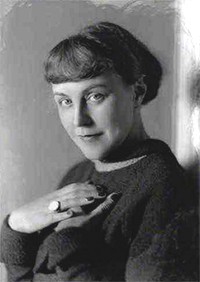
Image: Public Domain

Charlotte Mary Yonge (1823-1901) was an extremely popular and prolific author in the Victorian era, which her writing career more or less spanned; her first book, Le Chateau de Melville, was privately printed in 1838, and her last, Modern Broods, was published in 1900. Despite this, she is almost forgotten nowadays. However, she was very influential at the time and was admired by many contemporary authors such as George Eliot, Anthony Trollope, Christina Rossetti, and (especially) Louisa May Alcott. Although her books were definitely "of their time" in terms of the prevailing morality and sensibilities present in many of them, I think there are still things that can be appreciated about them today (although they are not for everyone). She is best-known for her Victorian domestic chronicles, which detail the lives of (usually very large) families of characters, most of whom are interconnected (this can be confusing to keep track of). She also wrote a fair amount of historical fiction, as well as non-fiction. (There is a complete list of her works, with links to download many of them for free, here.)
 
1383791
 
Her most famous book is The Heir of Redclyffe (1853), one of the bestselling books of the Victorian era, and generally considered to be one of Charlotte Yonge's best. In short, it's a story about a series of misunderstandings between two cousins which lead to tragic consequences. It's also a good example of a Victorian domestic story and the characters and interactions between Philip, Guy, and their other cousins, the Edmonstones, are the main point of the story really. Characterisation is probably Charlotte Yonge's strong point, particularly in this book, and I really like some of the secondary characters, Charles and Charlotte Edmonstone in particular. (It's also mentioned as being read by both Jo March in Little Women and Rebecca Randall in Rebecca of Sunnybrook Farm.)
 
611947

The Daisy Chain is about a family of 11 children, whose lives are changed near the start of the book by a carriage accident involving several members of the family. The story  basically chronicles the lives of the children (focusing mostly on the middle ones) as they grow up: there are school and home troubles, ambitions, romance, marriage, births, deaths. The central character is Ethel, who is at first awkward and bookish, and whose dream is to build a school and a church for Cocksmoor, a poor area near where they live; this is the central climax of the novel. This book was supposed to be a part of the inspiration for Little Women, and, although I prefer LW to this, it's still worth a read. It's also a good starting point for the "linked novels", as some characters return in other books. The sequel, The Trial, is also pretty good.

The Pillars of the House is in a similar vein to The Daisy Chain, although in this case there are thirteen children. They are orphaned fairly early on in the story, leaving the responsibility of looking after the family largely on the shoulders of the eldest two children, the "pillars of the house" of the title, Felix and Wilmet (who at the start of the story are aged 16 and 15). Again this chronicles the ups and downs of life for the family, with some children getting more attention than others. It's very long (over 1000 pages), and does drag a bit at times, but this does allow for a lot of development of the characters, and the book covers a long period of time (about 18 years). It isn't as good as The Daisy Chain, but the characters are mostly well-drawn and likeable and the longer page count means that the younger ones get to be more fleshed out than some of the May family are.
 
I've not read any of her historical novels, except for The Little Duke which I didn't particularly care for (although it's among her most popular books, so don't let that put you off), but I intend to (The Chaplet of Pearls, which is set in 16th century France, is on my Classics Club list). I do find I usually have to be in the mood to read one of her books though, so I'm not sure how soon I'll be picking it up.

Wednesday, 2 November 2016

October Recap


What I Read

27162989137912522718809
 
Chronicle of a Last Summer by Yasmine El Rashidi. A story about a girl growing up in Egypt. This was OK, but I didn't love it. Read my review to find out more.

Autumn Term by Antonia Forest. A classic children's book about twins who go to boarding-school determined to live up to the achievements of their four older sisters (which, not surprisingly, proves much harder than they expected). I enjoyed this story, but I didn't love it as much as I expected to.

Notebooks of a Middle-School Princess by Meg Cabot. This is the first in a spin-off series of The Princess Diaries for younger readers. It was a very quick read, which I thought was OK, but it would probably be good for the target audience.

13601659664675

Pea's Book of Best Friends by Susie Day. A MG contemporary novel about three sisters who move from the country to London when their mother becomes a quite successful author. It's sweet and quite funny at times, and I enjoyed it a lot.

Rose in Bloom by Louisa May Alcott. This was my Classics Club Spin book, so my thoughts will be up on December 1st. But I will say for now that I did really enjoy it.
 

 Currently Reading

The Fellowship of the Ring by J.R.R. Tolkien (Classics Club)
In Wartime: Stories from Ukraine by Tim Judah (Review copy)
Unequal Affections by Lara S. Ormiston
A Book of English Poetry edited by G.B. Harrison

Reviews Posted This Month

Surprised by Oxford by Carolyn Weber
Chronicle of a Last Summer by Yasmine El Rashidi

Non-Review Posts

Thursday, 20 October 2016

Favourite Authors: Noel Streatfeild

I've decided to start doing a series on my favourite authors, probably focusing more on lesser-known authors, but including some better-known ones as well. I'm not sure how often I'll post these, but I'll try to keep it fairly regular.

By Source, Fair use, https://en.wikipedia.org/w/index.php?curid=32697871
Mary Noel Streatfeild (1895-1986) was an author who wrote a great many children's books (and also some adult books, although I haven't read any of those). Recurring themes in her books include: family (most books focus on a group of siblings or cousins); children who are especially talented, mostly in the performing arts (acting, dancing, or music), although other talents and interests such as sports (swimming, tennis, skating) also appear; dealing with financial difficulties (sometimes in creative ways). The best known of her books is Ballet Shoes, her first children's novel, published in 1936.
 

What I like about her books:
  • Portrayal of family life: her families are mostly fairly realistic (except in terms of the amount of talent possessed); they don't always get on but are mostly loving families still. There is a lack of parents in quite a few of her books (as in many children's books), but the sibling relationships tend to be very well done.
  • Wish fulfilment: many of the children are very talented, and get to dedicate a lot of time to doing what they love, perhaps even making money from it from a young age, and a few become famous. Even if you've never really wanted to be an actor or a dancer, it's easy to fee like you do when you're reading the books.
  • Details of everyday life: I like that she often tells you how various details are organised, how much things cost, and so on. For example, Party Shoes goes into quite a lot of detail on the difficulties of creating costumes for a pageant the children are putting on, when rationing was still in place. It makes the books feel more realistic, in spite of the amount of talent the children possess; and despite this, they still have to work hard to be good at what they do and to overcome various difficulties.
  • Her books cover quite a long time period - from the 1930s to the 1970s; most of her books are set pretty much exactly when she wrote them. So from a historical viewpoint it's interesting to see how things changed over this time; in Ballet Shoes for example we have characters who are quite poor (or consider themselves to be) but still living in a big house with servants; which is certainly not the case in later books. Several books take place during the war and rationing of food and clothes also presents problems in some books. In the later books, the characters travel a lot more, often by plane, film acting becomes more common as opposed to stage acting (although both are there), and the children sometimes attend comprehensive schools (when they aren't at stage schools), rather than just private or grammar schools. And there are lots of little details and attitudes that change over time, that make it quite interesting to read some of her books from different decades.

Some of my favourites of her books are:
(some of these have been published under more than one title)

2251927
 
Ballet Shoes: The best-known of Noel Streatfeild's books and probably the best, this is the story of three orphans who are adopted by Great-Uncle Matthew (Gum). Pauline, Petrova and Posy are very different girls who attend a stage school (not all willingly) and discover their respective talents, performing in plays etc. to help earn money which they are struggling for. Meanwhile hoping for Gum to come back and sort things out. Despite the title, it's more about acting than ballet, although that does feature since Posy, the youngest, is obsessed with it.

Theatre Shoes (Curtain Up!): This is a sort of sequel to Ballet Shoes, set in wartime London. Another trio of siblings are given scholarships by the Fossil sisters to attend the stage school that they went to, giving them the chance to discover their talents (or, perhaps, lack of).

1385474
 
Skating Shoes (White Boots): Harriet is advised to take up ice skating as a form of exercise to help her recover from an illness. To her surprise, she turns out to be very good at it, and makes friends with another girl, Lalla, who is the daughter of two skaters and has been raised to be a star in it. Unusually for a Streatfeild book, Harriet's siblings don't feature much in the story, but there are some good home scenes in it too.

Ballet Shoes for Anna: This is another book about a ballet-obsessed girl. Anna and her two brothers are orphaned by an earthquake in Turkey, and have to go and live with an aunt and uncle in England, who are unsympathetic to Anna's ballet dreams (and to the children in general). Since they won't pay for Anna to have ballet lessons, she and her brothers have to come up with inventive ways to make some.
 
27236113
 
Travelling Shoes (Apple Bough): This is my second favourite of her books. Another family of four children, all named after famous musicians; Sebastian, the second oldest, is a world famous violinist, despite being a child - but since he isn't old enough to be allowed to perform in England (he has to be twelve), he and his parents and siblings travel the world so he can play in lots of other countries. The other three, especially Myra, the eldest, are getting fed up of this and want to settle down somewhere, but their parents are keen to keep the family all together (rather than leaving the others with their grandparents for example). So the book follows Myra's desire to find a home for them, whilst Wolfgang and Ethel (the two youngest) discover talents of their own.

Have you read any of Noel Streatfeild's books? Which ones did you enjoy most?

Book Review: Rose in Bloom by Louisa May Alcott

I read this for the 14th Classics Club Spin. It was my third time participating, and the first that I actually completed my book on time. I’d been meaning to read this for quite some time – since I read Eight Cousins in fact, which was more than three years ago! Because of this I found the beginning part of the book a little confusing as it took me a while to remember who everyone was and so on. But that was more a fault of mine than of the book, and once I got going, I really enjoyed this, more so than Eight Cousins (to which it is a sequel).

I thought it was a sweet story. The main question of the story of course is who Rose (and Phebe) will marry but there are other things going on too, as Rose and her cousins mature and try to find their paths and vocations in life. I definitely enjoyed getting to know these characters more and, although I liked some of them a lot more than others, they were all well-drawn and interesting characters. There were one or two pretty sad parts, but the ending was happy and satisfying.

Despite the author’s preface claiming that there was no moral to the story, there did seem to be a fair amount of moralising in it, but this was generally coming from the characters rather than the authorial voice, and is part of what is expected from this sort of novel. I didn’t find it detracted from the story for me.

Overall, I did enjoy this book a lot. It wasn’t quite up there with Little Women, but that would have been a hard one to match! I would definitely recommend this, especially if you’ve enjoyed some of Louisa May Alcott’s other books, but I would suggest reading Eight Cousins first.

Thursday, 13 October 2016

Anne of Green Gables Week Tag

Evie at Over the Hills is currently hosting an Anne of Green Gables week, so I thought I'd join in by filling in the tag.

http://overthehillsthereisacottage.blogspot.co.uk/2016/10/anne-of-green-gables-week-kickoff-and.html

1. How did you get introduced to Anne of Green Gables?
I don't actually remember, but I know I read it for the first time when I was about ten. Probably my mum recommended it to me.

 2. Are you more like Anne or Diana? Why?
I don't think I'm very much like Anne - my imagination certainly can't compete with hers and I'm generally quite a quiet person (as opposed to Anne who talks nearly all the time in the first book). So I'm probably more like Diana.

 3. If Rachel Lynde called your hair as red as carrots how would you react?
I would be quite surprised, since it definitely isn't. Although ironically I wanted to have red hair like Anne's when I was younger.

 4. Gilbert or Morgan Harris?
So I had to look up who Morgan Harris was ... it's been a long time since I've watched any of the films. I think I vaguely remember him actually, but at any rate I can't imagine I'd choose him over Gilbert :)

5. Honest opinion on the third Anne film.
I only watched a bit of it, and that was long before I'd read any of the books after the first. I'll probably watch it sometime, but I'm not anxious to.

 6. Have you seen the New Anne film?
No; I wasn't aware there was one. I'll have to check it out :)

7. What in your own words is a Kindred Spirit?
Someone who "gets" you, who understands your viewpoint and has a similar view of the world. It helps if you have lots of interests in common, too.

8.  Movie Gilbert or Green Gables Fables Gilbert?
Movie Gilbert, although I liked them both.
 
9.  Does anyone know where we can watch Road to Avonlea online?
Nope, sorry.

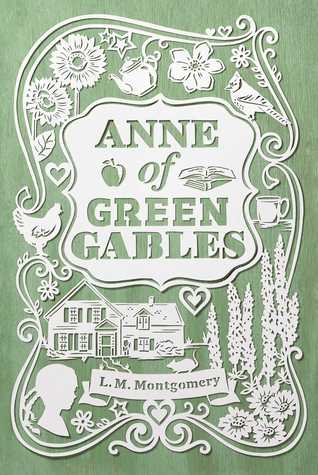
10. Favourite book cover?
 
16127220180511461391990

There are lots of editions with pretty covers, so it's difficult to choose! The one on the left is probably my favourite, but there are quite a few I really like.

11. The Films or the Books?
Definitely the books! Anne of Green Gables is probably my all-time favourite book. Although it has been a long time since I watched any of the films (like, about 11 years), so I definitely need to watch them again :)